
Sustainable Oak Construction Cumbria
Traditional Craftsmanship Meets Zero-Waste Building
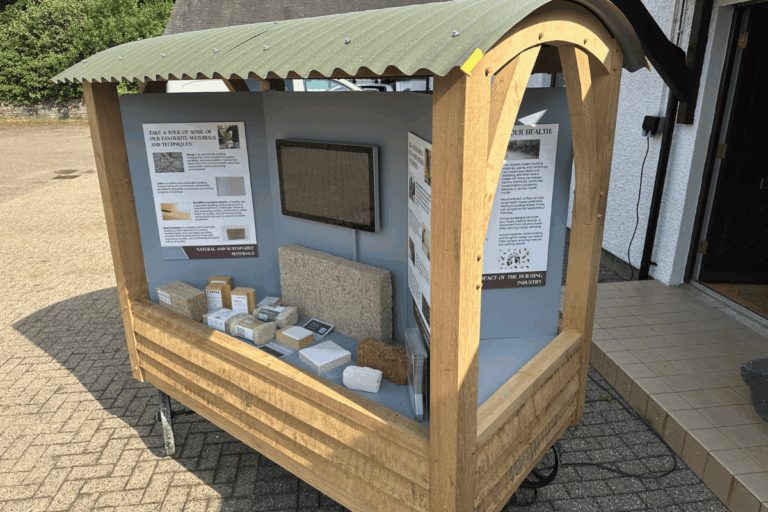
Sustainable Oak Construction: Where Cumbrian Craftsmanship Meets Environmental Responsibility
When we needed a mobile interpretation cart for our Coniston hub, we turned to Steve May from Lakeland Oak—a master craftsman whose sustainable oak construction perfectly demonstrates why traditional timber framing remains one of the most environmentally responsible building method available.
The result showcases everything that makes sustainable oak construction in Cumbria exceptional: zero-waste practices, carbon-negative building, and centuries-proven durability—all without compromising beauty or functionality.
The Project: Sustainable Oak Construction as a Teaching Tool
The Brief: Create a mobile cart for our Coniston office and heritage building shows across Cumbria that embodies sustainable construction principles while showcasing traditional craftsmanship.
The Solution: Steve designed and handcrafted a bespoke oak cart demonstrating sustainable oak construction techniques while serving as a practical business tool.
As Steve explains: “Initially, Stephen sent just brief sketches, and then it was me trying to decipher what it was going to be used for and the aesthetics… trying to keep it relatively simple, but show off our techniques.”
Why Oak? Cumbria's Most Sustainable Building Material 300-500 Years Without Chemical Treatment
Sustainable oak construction begins with material selection. Oak’s natural tannins provide extraordinary decay and insect resistance, with structures lasting centuries without chemical treatments.
Steve notes: “We’ve got frames built by basic carpenters that have lasted 300, 400 years—this form of construction has shown the test of time.”
This longevity is fundamental to sustainability: build once, last generations.
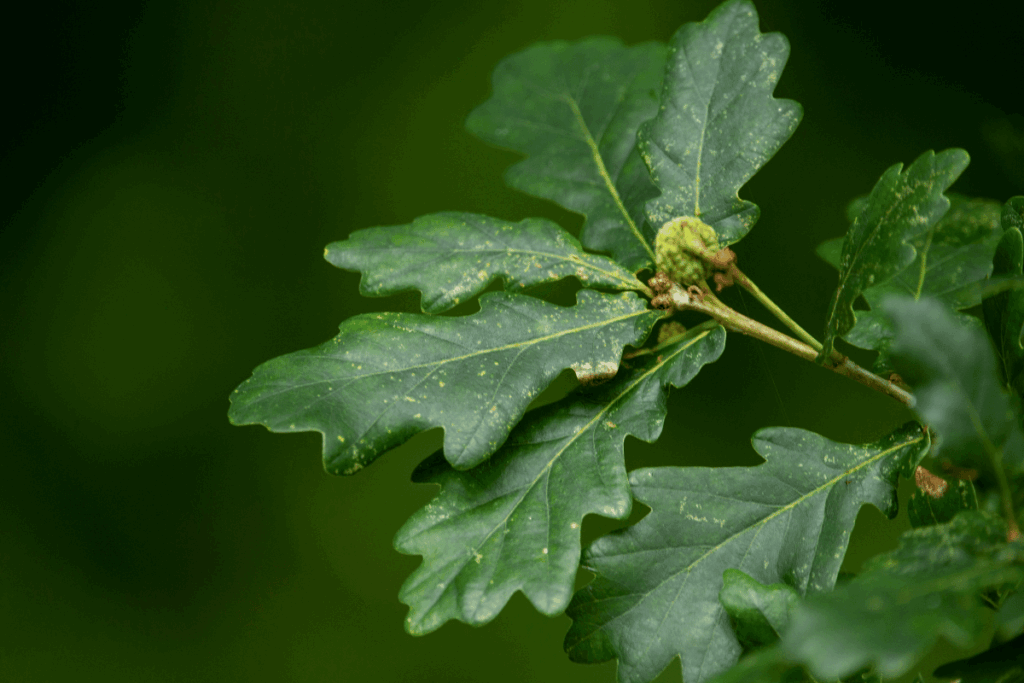
Carbon-Negative Construction in Cumbria
Unlike mining-intensive materials like steel or concrete, sustainable oak construction actively removes carbon from the atmosphere. Steve explains: “There’s a lot of carbon locked up in the oak. You can grow trees, you’re not mining them. As long as they’re managed properly, and all our timber is sourced from managed woodlands.”
Every oak frame stores decades of atmospheric carbon while supporting biodiversity through active woodland management—making timber construction a form of carbon removal when combined with sustainable forestry practices.
True Zero-Waste: Sustainable Oak Construction in Practice
Steve’s approach to sustainable oak construction in Cumbria eliminates waste entirely: “Working with green oak, it virtually comes from the log onto the sawmill and into our yard. We don’t end up with any waste products—just a pile of firewood. The sawdust is collected for horses. No waste products at all.”
Compare this to modern construction, where the UK produces more than double the construction waste per person than household waste.
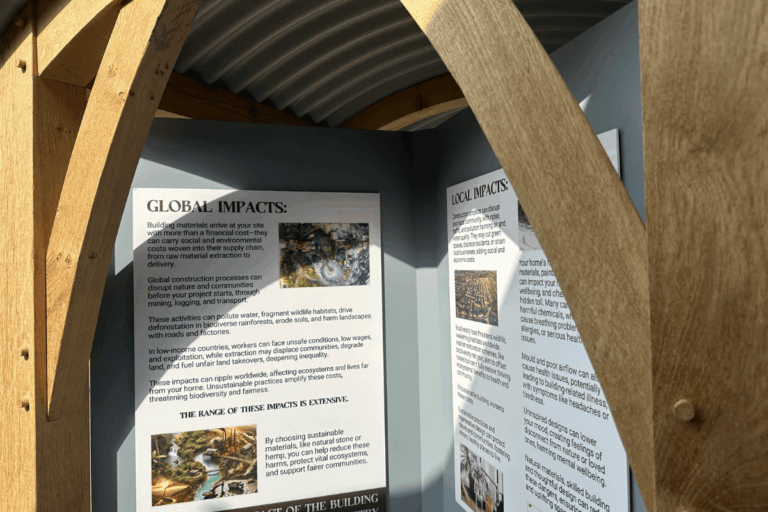
Traditional Hand Tools: The Sustainable Advantage Low-Energy, High-Skill Craftsmanship
Sustainable oak construction relies on human skill rather than energy-intensive processing. Steve’s passion is evident: “A lot of the cleaning up is done by hand tools. Power tools are there just for bulk removal, then you get onto your hand tools—hand plane, spokeshave, two-inch chisel. Most modern carpenters don’t even see these tools anymore.”
This approach requires minimal energy while producing superior results through understanding and working with the material’s natural properties.
Health Benefits Beyond Environmental Sustainability
“I stumbled across oak framing. It seemed cleaner than a lot of carpentry forms. There’s no real dust or airborne dust. It’s easier to chisel, easier to plane,” Steve observes.
He contrasts this with modern materials: “I’m sure they’re producing materials being used in houses which will be the next asbestosis. Rigid foam insulations break down into really fine dust, and any fine dust chemically produced is not good for your lungs.”
Sustainable oak construction offers healthy indoor environments free from off-gassing and harmful particulates.
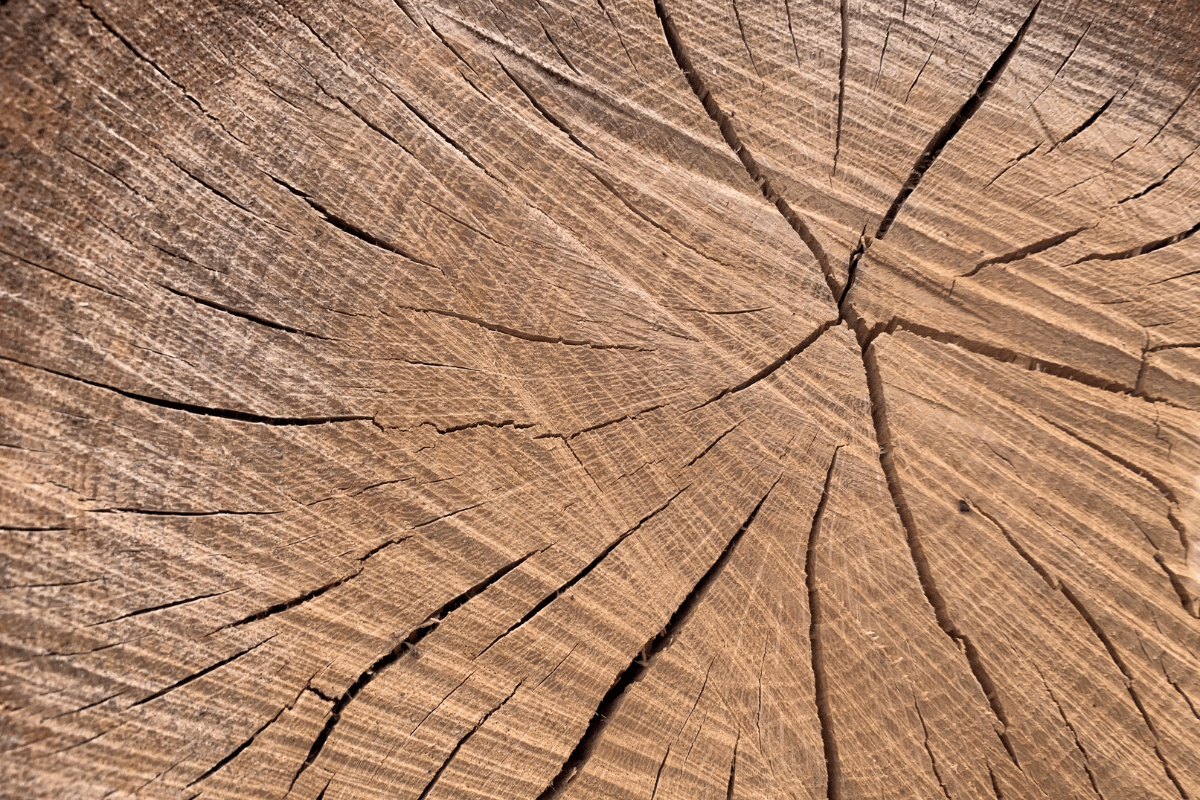
Sustainable Oak Construction Meets Modern Building Standards Bridging Past and Present in Cumbria
While traditional techniques remain unchanged, their application in modern sustainable oak construction requires thoughtful integration. Steve explains: “Modern buildings need to work to a higher performance. These days, the oak frame can still be the main structure, but generally it comes inside and you envelope the outside to make it airtight and watertight.”
Compatible Natural Materials for Sustainable Construction
The key to successful sustainable oak construction lies in choosing complementary materials that work in harmony: “Working with lime products and other natural materials, like sheep’s wool insulation or wood fibre insulation, lend themselves much more to an oak frame. Oak frames do need to breathe.”
This philosophy aligns perfectly with our approach at Stephen Grindrod Limited, where we specialise in:
- Lime mortars and renders
- Natural insulation systems (sheep’s wool, wood fibre)
- Breathable wall systems
- Heritage-appropriate construction details
Sustainable oak construction demands compatible materials throughout—you can’t pair a breathable oak frame with cement render or synthetic insulation without causing long-term problems
Sustainable Sourcing: Local Cumbrian Supply Chains Reducing Transport Miles, Supporting Local Craftspeople
Our collaboration with Lakeland Oak exemplifies sustainable oak construction principles beyond the material itself. Working within Cumbria means:
- Significantly reduced transport emissions
- Support for local craftspeople and traditional skills
- Preservation of regional building knowledge
- Strengthened local economy
Steve sources from managed UK woodlands, ensuring forests remain productive carbon sinks while providing sustainable building materials. This creates a virtuous cycle: well-managed woodlands absorb more carbon than unmanaged forests, while providing renewable construction materials.
The Art of Working with Natural Materials Understanding Material Behaviour
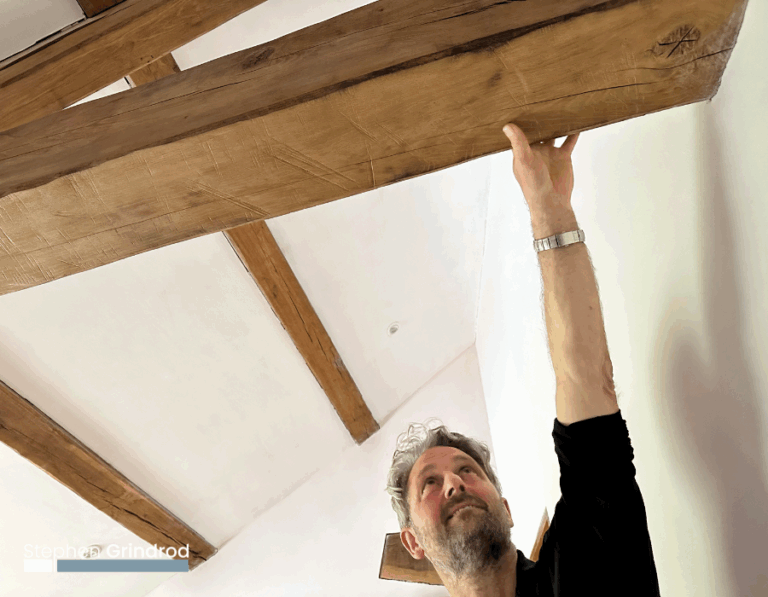
Sustainable oak construction requires craftspeople who work with rather than against natural properties. Steve explains: “You still have to allow for the fact that it’s a natural material, and with oak, the grain changes direction, so you have to be able to use your tools well.”
This deep understanding of material behavior is crucial for creating structures that perform well over centuries. Oak continues to move and respond to humidity—skilled craftsmanship accommodates this while maintaining structural integrity.
Craftsmanship as Sustainability
Steve’s philosophy embodies true sustainability: “I prefer more natural practice, really, so I like to do things properly. I feel a lot of modern methods are just shortcuts, really, just time-saving devices, so I tend to go more belt-and-braces approach.”
This commitment to quality over speed creates structures that last generations rather than decades—the ultimate form of sustainable construction.
The Finished Cart: Sustainable Oak Construction in Miniature
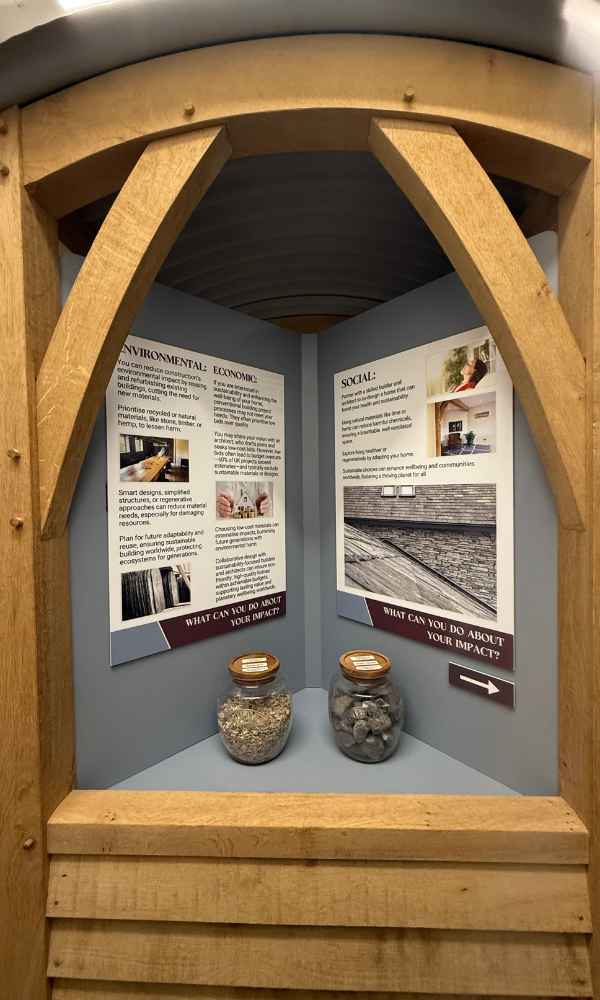
The completed interpretation cart serves as a tangible demonstration of sustainable oak construction principles:
- Every joint showcases traditional pegged mortise and tenon construction
- Zero adhesives or metal fasteners (except where structurally essential)
- Natural oil finish rather than synthetic coating
- Designed for centuries of use and eventual repair rather than replacement
The cart now travels with us to heritage building shows across Cumbria and the North West, serving as both a practical consultation space and a physical example of what sustainable construction truly means.
Lessons for Sustainable Construction Projects in Cumbria
Quality Creates Sustainability
Our collaboration reinforces that sustainable oak construction is fundamentally about creating lasting value. While modern construction prioritises speed and initial cost, traditional approaches focus on structures that serve future generations—the most sustainable approach possible.
Material Compatibility Matters
The project demonstrates why understanding material properties is crucial for sustainable construction. Just as oak requires specific joinery techniques and breathable finishes, sustainable buildings demand materials and methods that work harmoniously throughout their lifespan.
Pairing sustainable oak construction with cement, synthetic insulation, or impermeable finishes creates conflicts that lead to premature failure—the opposite of sustainability.
Local Skills, Local Materials, Lower Impact
Sustainable oak construction in Cumbria benefits from:
- Established local craftspeople with generations of knowledge
- Reduced transportation emissions
- Support for regional economies
- Preservation of traditional skills for future generations
Why Choose Sustainable Oak Construction?
Environmental Credentials
- Carbon storage: Every oak frame locks away decades of atmospheric CO₂
- Renewable material: Managed forests provide continuous supply
- Zero waste: Traditional processing creates only usable byproducts
- Low embodied energy: Minimal processing compared to steel, concrete, or brick
- Biodiversity support: Sustainable forestry maintains healthy woodland ecosystems
Health and Wellbeing
- No off-gassing from synthetic materials
- Minimal airborne dust during construction
- Natural, breathable building fabric
- Connection to natural materials (biophilic benefits)
Durability and Value
- 300-500 year lifespan when properly maintained
- Repairable rather than replaceable
- Timeless aesthetic that doesn’t date
- Increases property value through craftsmanship and character
Sustainable Oak Construction at Our Coniston Hub
The Lakeland Oak interpretation cart is now a permanent fixture at our Coniston hub, where visitors can see firsthand the quality and beauty of sustainable oak construction in Cumbria.
Whether you’re:
- Planning a new build using sustainable materials
- Restoring a heritage property with traditional oak elements
- Exploring natural alternatives to modern construction
- Seeking compatible materials for oak frame buildings
We’d love to show you how sustainable oak construction and natural building materials can work together to create beautiful, healthy, long-lasting buildings.
Take the Next Step
Ready to explore what’s possible for your heritage home? Book a free consultation where we’ll discuss your specific challenges and show you real examples of successful natural material upgrades.
Call us: 01539 437794
Email: hello@stephengrindrod.co.uk
Visit: Our Coniston Hub (by appointment)
Your heritage home deserves an upgrade that honours both its past and our planet’s future.